

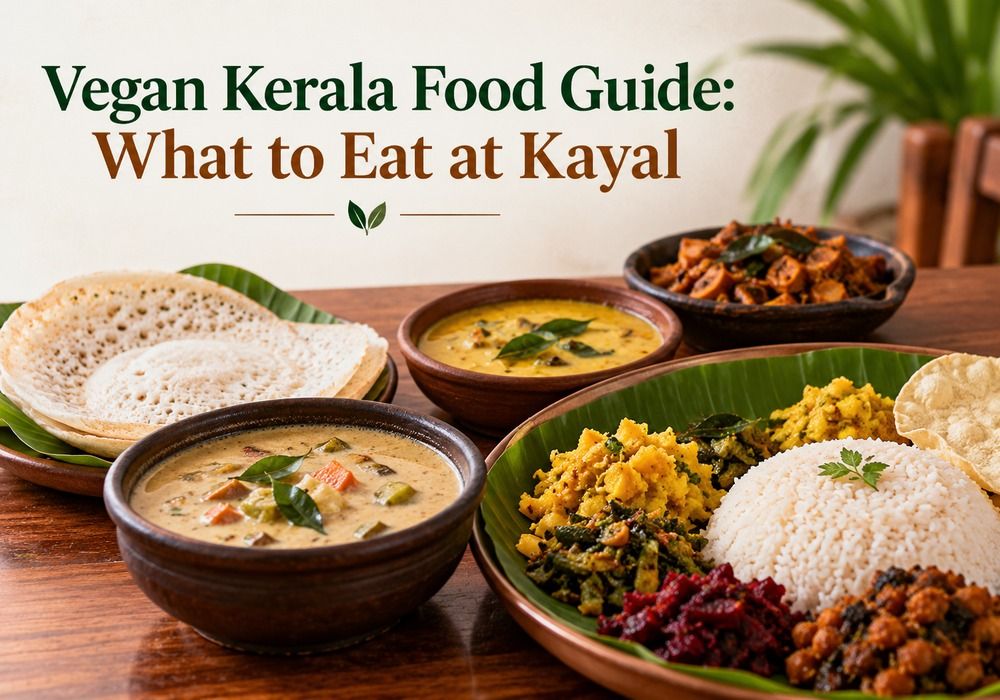
Vegan Kerala Food Guide: What to Eat at Kayal
Every year on 1 November, World Vegan Day sends people looking for a vegan Indian restaurant that offers more than a token salad. Kerala cooking is a good place to start. The cuisine of India's southwest coast is built on rice, lentils, vegetables, tamarind and coconut, so plant-based eating is part of the tradition rather than a workaround. Here is how to find vegan Kerala food on a menu, what to order, and what to ask before you do.
Why Kerala cooking suits a vegan diet
Kerala is a beautiful coastal state in southern India, known for its lush green hills, scenic backwaters, and Arabian Sea coastline. The climate gives the region coconut palms, banana plants, curry leaves, black pepper, ginger and fresh turmeric all year round, and those ingredients are the base of its cooking.
Many dishes need no dairy. Coconut oil is widely used in Kerala cooking, while coconut milk gives many traditional dishes a rich, smooth texture and natural flavour. Mustard seeds, curry leaves and dried red chilli are fried in hot oil to start a dish, and that tempering gives deep flavour without any animal products.
Kerala also has a long vegetarian tradition, especially in temple kitchens and the festival feast called the sadya. This is why so many people searching for vegan Kerala food find that a good part of the menu already works for them.
If you want to see how these flavours fit into the wider regional picture, our Kerala cuisine guide covers the spices, techniques and signature dishes.
Vegan by default (dosa, idli, uttapam, sambar, rasam)
The south Indian classics are the easiest place to start. They are traditionally plant-based:
- Dosa: a thin, crisp pancake made from fermented rice and urad dal batter. Plain and masala dosas are usually vegan, filled with spiced potato and onion.
- Idli: soft steamed rice-and-lentil cakes. Light, filling and gentle on the stomach.
- Uttapam: a thicker, pizza-style version of the dosa, topped with onion, tomato, chilli or coriander.
- Sambar: a tangy lentil and vegetable stew flavoured with tamarind and sambar spice blend. It is the usual partner for idli and dosa.
- Rasam: a thin, peppery tomato-and-tamarind broth, good as a starter or poured over rice.
Together these make a full meal. Order a dosa with sambar and coconut chutney, add an idli on the side and a bowl of rasam, and you have a balanced vegan dinner. Many people looking for the best restaurant in the UK for south Indian food start with this combination because it shows the cuisine at its simplest.
Keep in mind that some restaurants use ghee or butter to make dosas crispier, so it is best to check the ingredients before ordering. Ask for yours to be made with oil.
Coconut-milk stews and banana-flower dishes
Kerala's vegetable dishes are worth ordering in their own right, and they are where the region stands out from the north Indian curries most UK diners know.
Coconut-milk stews are mild, fragrant and creamy. Vegetables such as potato, carrot, beans and peas simmer gently in coconut milk with ginger, green chilli, whole spices and curry leaves. They are best eaten with appam, the lacy fermented rice pancake with a soft centre and crisp edge, which soaks up the sauce well.
Banana-flower dishes are a Kerala speciality. The flower of the banana plant is finely chopped and cooked with grated coconut and spices into a dry stir-fry called thoran. It has a slightly earthy, artichoke-like bite. If you want something you won't find at a typical restaurant in the UK, look for it. Other thorans, made with cabbage, beans or beetroot, follow the same style and are usually vegan too.
Other dishes to look out for are avial (mixed vegetables in a coconut and yoghurt-free sauce in some kitchens, so confirm) and lentil dishes such as parippu. Meals like these are why many guests now call us their favourite vegan Indian restaurant for sharing plates.
Vegan on request
Plenty of dishes that are not vegan as written can be adapted. Many curries are naturally plant-based except for a spoonful of ghee, a splash of cream or a dollop of yoghurt, and a good kitchen can leave those out.
When you book or order, it helps to:
- Say "vegan" clearly rather than "vegetarian", because the two are often confused.
- Ask about ghee, butter, paneer, yoghurt, cream and honey in the dishes you're considering.
- Ask whether breads such as parotta contain milk or egg, since recipes vary.
- Mention any allergies alongside your dietary needs.
If you eat halal or have other dietary requirements as well, our Halal and dietary guide explains how we handle ingredients and preparation. Booking a table for a mixed group of vegans, vegetarians and meat-eaters is easy too: our group dining page covers party sizes and menus, so everyone can order what suits them and share.
Frequently asked questions
Is Indian food good for vegans?
Yes, especially south Indian and Kerala cooking. Rice, lentils, vegetables, coconut and spices are central to it, and many dishes are plant-based as standard.
What is vegan Kerala food?
It means dishes from Kerala made without meat, fish, dairy, egg or honey. Dosa, idli, sambar, rasam, thoran and many vegetable curries qualify, though always check how each dish is made.
Is ghee used in Kerala cooking?
Coconut oil is the traditional fat, but ghee is sometimes used in certain dishes and for finishing. Ask your server and they can tell you which dishes contain it.
Can I find a vegan Indian restaurant near me in Leicester?
Yes. Our Leicester restaurant page has opening times, location and booking details, and you can ask the team about vegan options when you book.
Is Kerala food spicy?
It can be, but the heat is usually balanced by coconut, tamarind and fresh herbs. You can ask for milder dishes if you prefer.
How do I find the best restaurant in the UK for vegan Indian food?
Look for a kitchen that clearly marks vegan dishes, explains its ingredients openly and is happy to adapt recipes. Those are the signs of a restaurant in the UK that takes plant-based dining seriously.


Add a comment